
Flooding and Infrastructure
Between July 21 and August 2, three storms dropped more than 300 millimetres of rain on St. Catharines. Thousands of basements took water. If you are reading this because it happened to you, I am not going to tell you a councillor can stop the rain. I want to tell you where the decisions actually are, and which ones I would push on.
Last updated: October 3, 2026
Start with what the City has said
After the storms, City crews inspected the system. Their finding was that there was "no indication that a single blockage or isolated infrastructure issue was responsible" for the widespread flooding.
The City has also been clear that no drainage system can be built to remove flood risk in every storm. That is true, and I am not going to pretend otherwise.
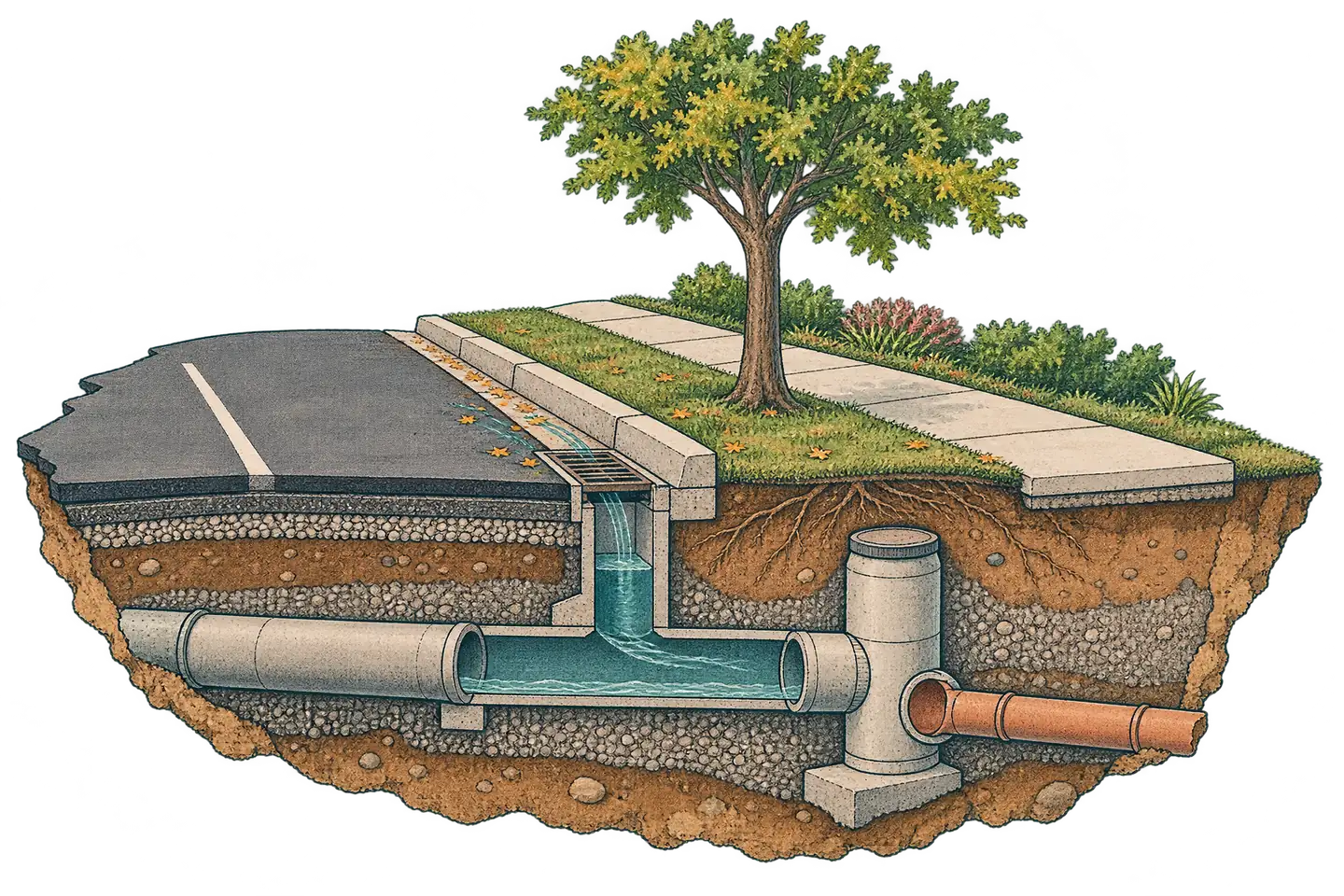
But those two statements together tell you something specific. The system was not broken. It was overwhelmed. That is not a maintenance question. It is a capacity question — how much water the pipes under your street were designed to carry, and how far short of a 2026 storm that design now falls.
And a capacity question has an answer. We just have not gone and got it yet.
The gap I would close
The City's 2025 Asset Management Plan is the main document that decides what infrastructure gets renewed and what it costs. For stormwater, it reports no funding gap: the money anticipated and the service level proposed are the same number.
The same document also reports that of all City services, stormwater has the most assets in unknown condition — $82.3 million worth. More than roads. More than parks. More than any other category.
Those two facts sit a few pages apart, and I do not think either one is anybody's fault. Asset management plans measure the condition of things we have inspected. They are not designed to answer "can this system carry a hundred millimetres of rain in six hours."
The document that answers that question is a stormwater master servicing study. St. Catharines has one scheduled. It is scheduled last.
So here is my position in one sentence: we are making funding decisions about a system we have not finished measuring, and the measurement is the cheapest part.
Emergency FLAP: what it covers and what you sign
The City says Council approved $20 million for Emergency FLAP at its August 26, 2026 meeting. The program is intended to reimburse eligible homeowners for 90 per cent of eligible costs, up to $5,000 per property. These measures target sewer-backup risk; they do not protect against water entering through foundation cracks, window wells or other openings. Read the City’s program details.
- Who qualifies. The City lists single- and semi-detached residential properties, including duplexes, triplexes and quadplexes, built before 2012, within City limits and connected to its sanitary sewer. You do not need to have flooded to apply.
- What it pays for. Eligible measures include mainline backwater valves, weeping-tile disconnection and reconnection to a sump-pump system, eligible backup pumps, related piping, the initial contractor assessment and the Plumbing-Only permit.
- What you do and sign. Apply online; have the work done by a licensed plumber under a valid City Plumbing-Only permit; arrange the final plumbing inspection; then submit the paid invoice and required documents, including a signed release waiver, for reimbursement.
Read the release before signing. Clauses 11 and 12 ask homeowners to release the City from claims for future sewer backups caused by failure of program work, and to indemnify, defend and hold the City harmless against claims and costs arising from the program or related activities. Read the City’s full release waiver (PDF).
I will ask the City for a plain-language explanation of the release, especially clauses 11 and 12, before homeowners sign. I will also ask it to publish program uptake and cost data — applications, approvals, rebates paid and total spending — so residents can see how many households it reaches and what it costs.
Six things I would push for
1. Finish the capacity picture, and publish it.
Accelerate the stormwater master servicing work rather than leaving it at the back of the queue, and close the $82.3 million of stormwater assets the City lists in unknown condition. Then publish a flood-risk map, so a resident can look up their own street instead of finding out during a storm.
2. Publish the design standard, and every post-event review, automatically.
You should be able to find out what the system under your street was built to handle without filing a freedom-of-information request. Same for what the City learned after each event. Routine disclosure, not disclosure on request.
3. Protect the money in the 2027 budget.
Council has committed $20 million to an emergency version of the Flood Alleviation Program — real help, and the right call. It came from the wastewater reserve fund and the wastewater capital budget, with the displaced projects moved onto debt. That is a defensible emergency decision. It is also a bill that arrives later. The 2027 budget is where this stops being a response and becomes a plan, and the council elected in October is the one that writes it.
4. Put stormwater into the federal infrastructure allocation.
The Canada Community-Building Fund gives St. Catharines about $4.4 million a year — the most reliable outside capital money the City receives. In 2024, 2025 and 2026 it was allocated to roads, watermains and sanitary sewers. The storm sewer collection system received none of it in any of those three years.
That is not a provincial rule or a regional decision. It is a council allocation, and a council can change it.
5. Make new development and park renewal carry water.
Every new project should have to show where its water goes. And when we rebuild a park, it should be designed to hold rainfall as well as host a ball game. Park renewal is fully within the City's control, it is visible, and it is the kind of work that quietly slips down capital priority lists. Doing it twice as usefully costs very little more.
6. Dig once, coordinate the work.
When a City street is opened for sewer work, I would push to coordinate related stormwater, watermain and road renewal where the work overlaps, rather than digging up the same street twice.
What a city councillor does not control
I would rather be straight about this boundary than promise things this seat cannot deliver.
- The City
- owns the local storm, sanitary and combined sewers under your street — roughly 406 kilometres of storm sewer, about $1.19 billion to replace. It runs the Flood Alleviation Program, sets the capital budget, and decides how fast the studies happen. That is the part I am running to change.
- Niagara Region
- owns the trunk sewers and the treatment plants. During these storms the Region reported its infrastructure operating normally.
- The Province
- decides whether disaster assistance is activated. As of late August, it had not been.
- Your insurer
- is not something a councillor can direct at all.
On the provincial piece, one thing residents deserve to hear plainly: Disaster Recovery Assistance for Ontarians generally does not cover sewer backup, except through a low-income provision. Most of the damage in this city was backup. Activating that program still matters, and I would push for it. But anyone telling you it fixes this is not being straight with you. Advocacy is advocacy. It is not delivery.
Where this meets the GM site
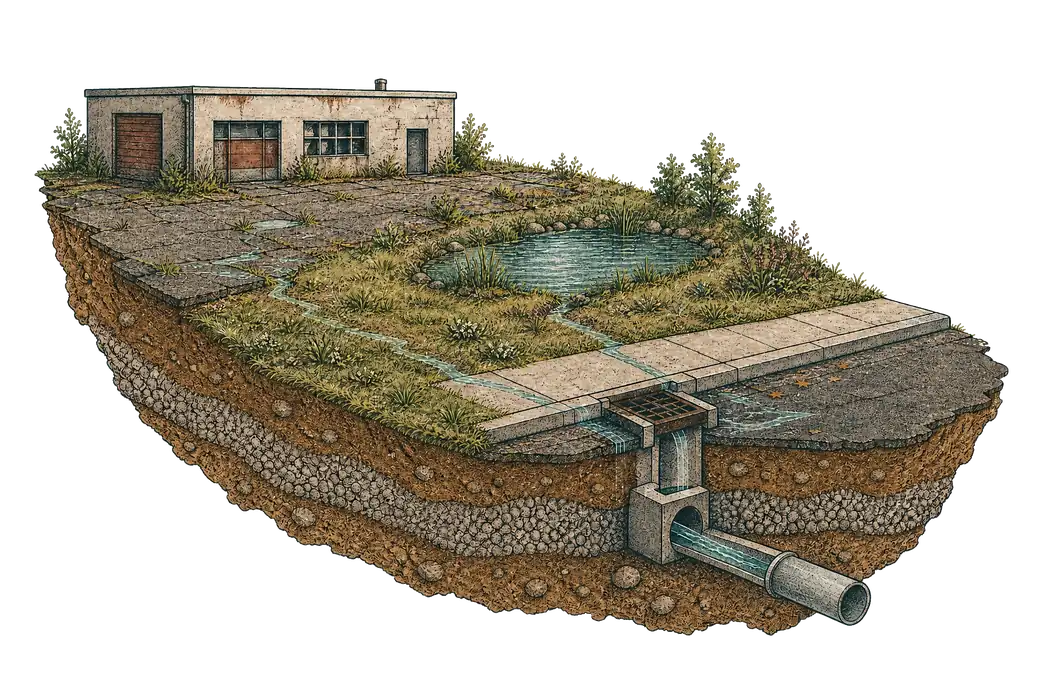
During the August 2 storm, the stormwater retention pond on the former GM property on Ontario Street overflowed across the property line, as reported by The Pointer — with the filtration system meant to treat that water offline since 2023. The Province has since asked the owner for stormwater sampling and an engineering assessment of the site's stormwater capacity.
That is the same file I have been documenting since I started this campaign, and it is the same question: fifty acres of neglected land is not a separate problem from the water in your basement. It is upstream of it.
What I will not tell you
I will not tell you I can flood-proof St. Catharines. Nobody can, and the City has said so in writing.
What I will commit to is mechanical, because mechanics are what you can hold someone to:
- I will vote to fund the capacity study rather than defer it again.
- I will push for the design standard and post-event reviews to be published as a matter of routine.
- I will tell you how I voted on every one of these and why. You should never have to guess my reasons.
If your home took water, I would like to hear about it directly. This address reaches me, not a staffer.
Sources
Everything on this page comes from public documents. If you want to check any of it:
- City of St. Catharines, 2025 Asset Management Plan — stormwater replacement value, unknown-condition figures, funding scenarios
- City of St. Catharines, 2024–2026 Multi-Year Capital Budget, Schedule A — Canada Community-Building Fund allocations by service
- City of St. Catharines, July 2026 Flooding Response and Recovery — inspection findings, rainfall totals, residual-risk statement
- City of St. Catharines, Emergency Flood Alleviation Program — August 26, 2026 Council meeting, eligibility and coverage
- City of St. Catharines, Emergency FLAP: How it works — assessment, permit, inspection and reimbursement
- City of St. Catharines, Emergency FLAP FAQs — sewer-backup scope, permits and eligibility
- City of St. Catharines, Emergency FLAP Release Waiver — clauses 11 and 12
- Government of Ontario, Disaster Recovery Assistance for Ontarians — eligibility and coverage
- The Pointer, reporting on the former GM property, August 11, 2026
Last updated: October 3, 2026